Key Takeaways
- Myopia makes distant objects look blurry while close objects stay clear, and it usually starts in childhood.
- Myopia most commonly develops in school-aged children (around ages 6–10) and progresses fastest during childhood and early adolescence as the eyes grow.
- Stronger prescriptions are linked to cataracts, glaucoma, retinal detachment, and myopic macular degeneration.
- Myopia control can help slow progression with options like atropine eye drops, ortho-k, and multifocal lenses.
- Yearly eye exams help track changes in your child’s vision.
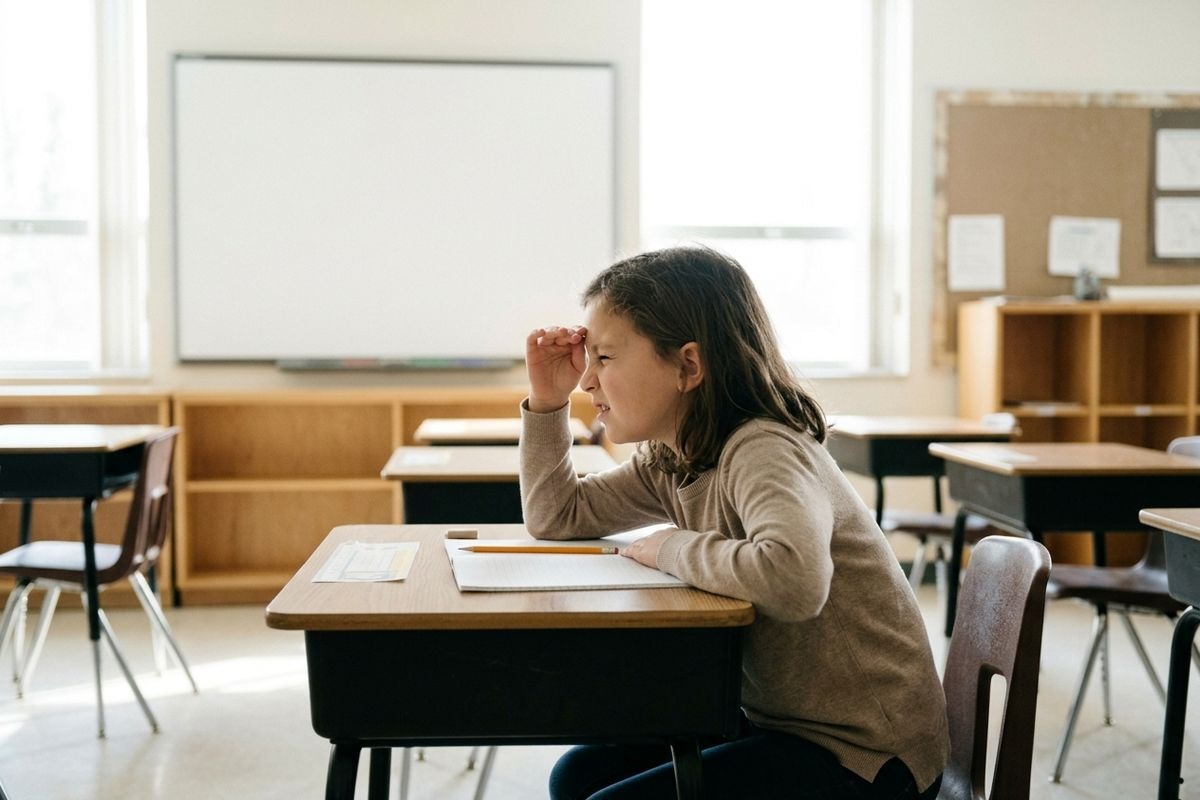
Your child squints at the whiteboard, scoots closer to the TV, or asks you to read a street sign out loud. These small moments can point to myopia, also called nearsightedness. Our team at Danville Optometric Group sees how quickly it can change in growing kids.
If childhood myopia goes untreated, your child’s prescription can keep climbing, and stronger prescriptions are linked to a higher risk of eye conditions like cataracts, glaucoma, and retinal detachment later in life. The good news is you have options. Our myopia control services can help slow those changes while your child is still growing.
What Is Childhood Myopia?
With myopia, distant objects look blurry while close objects typically stay clear. Your child might breeze through a chapter book but struggle to read the scoreboard at a soccer game.
Myopia usually starts in childhood as your child’s eyes grow. Regular glasses sharpen your child’s vision, which helps in class and on the field. However, they don’t slow how quickly the prescription changes.
When Myopia Tends to Change
Myopia can progress slowly or quickly, and every child is different. It often changes between ages 8 and 18, then typically stabilizes in the late teen years.
This window gives you time to act.
Why Myopia Is More Than Blurry Vision
A new pair of glasses each fall can start to feel like part of the back-to-school routine. Prescriptions can climb higher year after year, and those numbers matter beyond a clear view of the board.
Kids who develop myopia at a younger age, or whose vision changes faster, face a higher future risk. Stronger prescriptions are linked to eye health concerns in adulthood.
How to Tell if Myopia Is Severe
High myopia often follows steady yearly increases, and these signs can point to a more serious pattern:
- Your child’s prescription goes up at every yearly eye exam.
- The change between exams is a big jump instead of a small step.
- The prescription reaches -6.00 or higher, which eye doctors consider high myopia.
Eye Conditions Linked to Untreated Myopia
As prescriptions grow stronger, the risk of certain eye conditions grows too.
Cataracts and Glaucoma
Medium-to-high myopia is linked to a higher risk of cataracts and glaucoma. Cataracts cloud the lens inside the eye, so the world can look hazy, like peering through a foggy window.
Glaucoma can permanently damage the optic nerve.

Retinal Detachment and Myopic Macular Degeneration
The risk of both conditions rises sharply with stronger prescriptions, and both can lead to permanent vision loss. Watch for these warning signs:
- Flashes of light appear in your child’s vision.
- New floaters drift across your child’s view.
- Part of your child’s vision goes dark or blurry.
These signs call for a prompt eye exam.
How Myopia Control Can Help Your Child
Myopia control can’t make myopia go away, but it can help slow its progression. The goal is a milder prescription as your child grows, which can mean thinner lenses and a lower risk of the concerns linked to high myopia.
Management Options for Kids and Teens
Your eye doctor can recommend one of several options:
- Atropine eye drops are a prescription option for kids and teens.
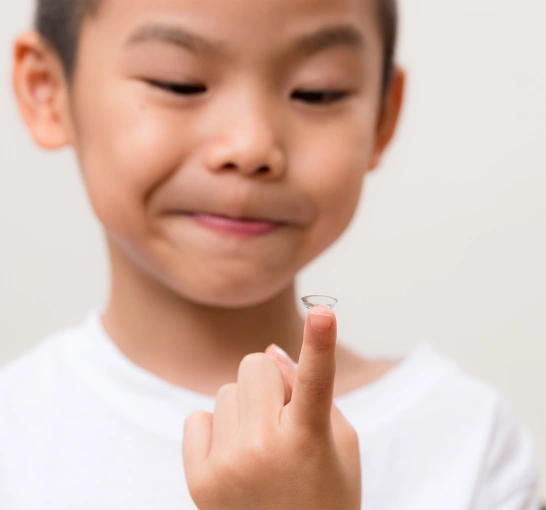
- Ortho-k lenses are a contact lens option for myopia control.
- Multifocal contact lenses or multifocal glasses give your child a choice between contacts and frames.
Daily Habits That Support Your Child’s Eyes
Small changes at home can support your child’s management plan. Aim for about 14 hours of outdoor time each week, or roughly 2 hours a day. Bike rides, park visits, and backyard games all count.
It also helps to track and limit time on phones and tablets. Research on screen time and myopia is still growing, but a screen-free hour after school is an easy place to start.
Schedule Myopia Control in Danville with Your Family Optometrist
Yearly eye exams help your eye doctor track prescription changes and spot big jumps early. Once your child starts myopia control, follow-up visits every 6 to 12 months help our team see how the plan is working.
Every plan is built around your child’s age, maturity, and lifestyle, so a teen athlete might need something different from a young child just starting school.
Danville Optometric Group also offers eye exams, dry eye treatment, and vision therapy. Book your child’s eye exam today to talk about myopia control and help protect your child’s vision as they grow.