
Key Takeaways
- Myopia happens when the eyeball grows too long, so faraway things look blurry.
- Essilor® Stellest® glasses use tiny lenslet rings and suit kids ages 6 to 12 who wear them 10 or more hours a day.
- MiSight® 1 day contacts are daily disposables approved for kids 8 and older who can handle a routine.
- Ortho-K uses specially designed rigid contact lenses worn overnight as another FDA-approved option for myopia control.
- Soft bifocal contact lenses may also be used for myopia management, although they are not FDA-approved specifically for myopia control.
- Full-time wear rigid gas permeable DMP lenses can provide another option for children whose prescriptions or astigmatism make MiSight® or Ortho-K unsuitable.
- Sports, age, and daily habits all shape which choice fits your child.
- Regular visits with your Danville optometrist track eye growth over time.
You want to slow your child’s nearsightedness, and you have been presented with a few options. The primary FDA-approved myopia control options include Essilor® Stellest® glasses, Ortho-K rigid contact lenses, and MiSight® 1 day soft contact lenses. Other contact lens designs may also be considered depending on your child’s prescription and visual needs. Danville Optometric Group hears this question often, and the answer depends on your child’s age, routine, prescription, eye shape, and how they spend their days.
The right choice comes down to fit, not a ranking. Some children may be best suited to glasses, while others may benefit from soft or rigid contact lenses. In some cases, a child’s prescription or astigmatism can also influence which options are appropriate. However, it is important to note that a myopia control plan can shift as your child grows.
Myopia in Kids and Why Slower Progression Matters
Your child squints at the whiteboard, holds the tablet close, or sits inches from the TV. Those small habits often point to myopia, also called nearsightedness. It happens when the eyeball grows a little too long, so light lands in front of the retina instead of on it. Close-up things stay sharp, but anything far away turns fuzzy.
Here’s the part many parents don’t expect. Myopia usually keeps advancing through the teen years and into the early 20s. The more the eye stretches, the higher the odds of eye health issues later in life. Slowing that growth now can lower those risks down the road, which is why myopia control matters so much while your child is still young.
How Essilor® Stellest® Glasses Work for Myopia Control
Essilor® Stellest® lenses look like regular glasses. The center stays clear for sharp distance vision, while hundreds of tiny lenslet rings surround it. Those rings gently reshape how light focuses around the retina, signalling the eye to slow its growth.
The FDA has approved Essilor® Stellest® for children ages 6 to 12. Kids see the strongest slowdown when they wear the glasses at least 10 hours each day, so full-time wear during school, homework, and playtime helps the most. Research also shows that time spent outdoors can also support slower progression.
How Ortho-K Works for Myopia Control
Ortho-K uses specially designed rigid gas permeable contact lenses that are worn overnight. While your child sleeps, the lenses temporarily reshape the front surface of the eye so they can see clearly during the day without glasses or daytime contact lenses.
Ortho-K is also used to help slow the progression of myopia. Because the lenses are worn while sleeping and removed in the morning, they can be especially appealing for active children who do not want to wear glasses or contacts throughout the day.
How MiSight® 1 day Contacts Work for Kids
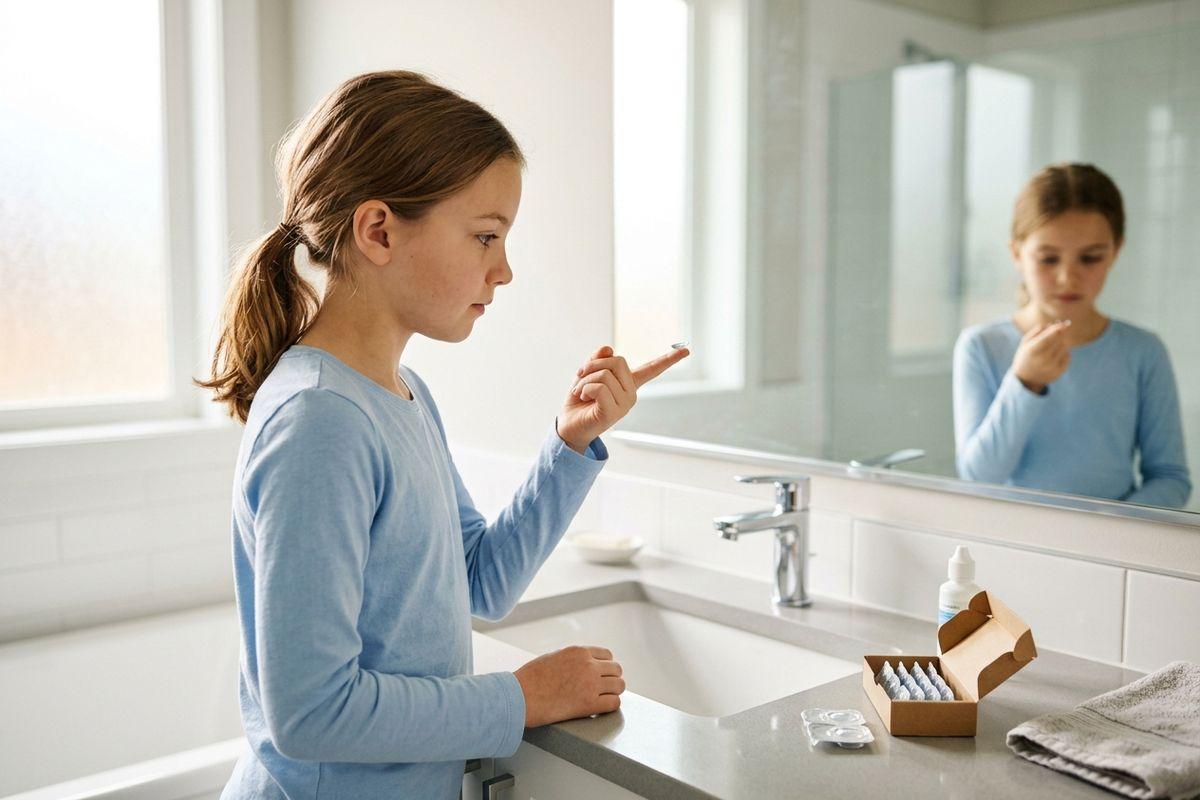
MiSight® 1 day takes a different path. These are soft, daily disposable contacts your child puts in each morning and throws away each night. No cleaning solution, no case, no overnight storage.
The FDA has approved MiSight® 1 day for kids 8 and older. Concentric rings built into the lens redirect some light in front of the retina while keeping central vision clear, which nudges the eye to slow its lengthening.
Daily Handling and Hygiene Steps
Good habits keep contact wear safe and comfortable. Younger kids often do well with a parent watching the first few weeks. Remember to:
- Wash and dry hands before touching the lenses.
- Insert and remove each lens gently.
- Throw the pair away every night. No reuse.
- Add parent oversight for younger or newer wearers.
Other Contact Lens Options for Myopia Control
While Stellest®, Ortho-K, and MiSight® are primary options for myopia control, some children need a different lens design based on their prescription or astigmatism.
Soft Bifocal Contact Lenses
Soft bifocal or multifocal contact lenses can also be used to help manage myopia. However, these lenses are not FDA-approved specifically for myopia control and are generally considered an alternative when other options are not suitable.
Full-Time RGP DMP Lenses
For children with prescriptions that fall outside the available parameters for MiSight®, or who have astigmatism that cannot be adequately corrected with MiSight® or Ortho-K, a full-time wear rigid gas permeable DMP lens may be an option.
These lenses are worn during the day and are designed to both correct the child’s vision and help control myopia progression. Because they can be customized across a broad range of prescriptions and astigmatism, they can provide an option when other myopia control contact lenses are too limited for a child’s visual needs.
Comparing Myopia Control Options
The main difference between these options is not simply glasses versus contacts. Each uses a different lens design, wearing schedule, and fitting approach, so your optometrist will consider both your child’s lifestyle and their prescription.
Daily Routine and Comfort
Glasses ask very little. Your child slips them on in the morning and wipes the lenses clean when they smudge. MiSight® and full-time RGP DMP lenses are worn during the day, while Ortho-K lenses are worn overnight and removed in the morning.
Sports and Active Kids
Essilor® Stellest® lenses come impact-resistant, and a sports strap can hold them in place during a soccer match. Contact lens options remove frames from the equation, while Ortho-K can provide clear daytime vision without glasses or daytime lenses.
Age, Prescription, and Maturity Fit
Younger kids who aren’t ready to handle contacts often do better with Essilor® Stellest®. Kids who can follow a morning-and-night routine and keep their hands clean tend to take to MiSight® 1 day quickly. Prescription strength, astigmatism, corneal shape, and whether the child is comfortable with daytime or overnight lens wear can also influence which contact lens design is appropriate.
How to Choose the Right Option
Think about your child’s age, hobbies, prescription, and daily habits. A cautious 7-year-old and a sporty 11-year-old often land on different choices, and both can be right.
Your choice isn’t locked in either. As your child grows and gains independence, a switch from glasses to contacts can make sense. Regular visits help our team measure eye growth over time and adjust the plan when needed.
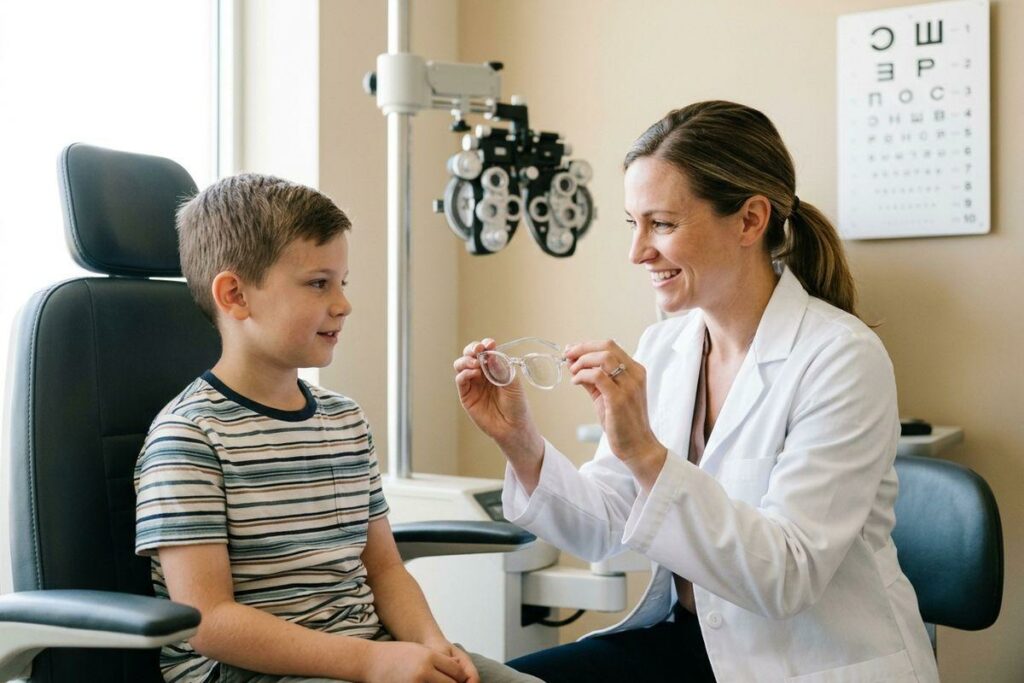
Danville Optometric Group can walk you through the available myopia control options and determine which lens design best matches your child’s prescription, eye shape, lifestyle, and needs. Call to book a myopia control consultation and give your child’s vision the attention it deserves.