
Many people assume that, once they have their glasses prescription, switching to contact lenses is just a simple swap. After all, your eye doctor already knows your prescription, right?
It’s actually more complicated than that. A contact lens exam requires additional measurements and assessments beyond what happens during a standard eye exam. While your regular eye exam focuses on your overall eye health and vision correction, a contact lens exam involves measurements of your eye’s shape, curvature, and surface characteristics. This helps ensure your lenses fit safely and comfortably.
What Happens During Your Standard Eye Exam
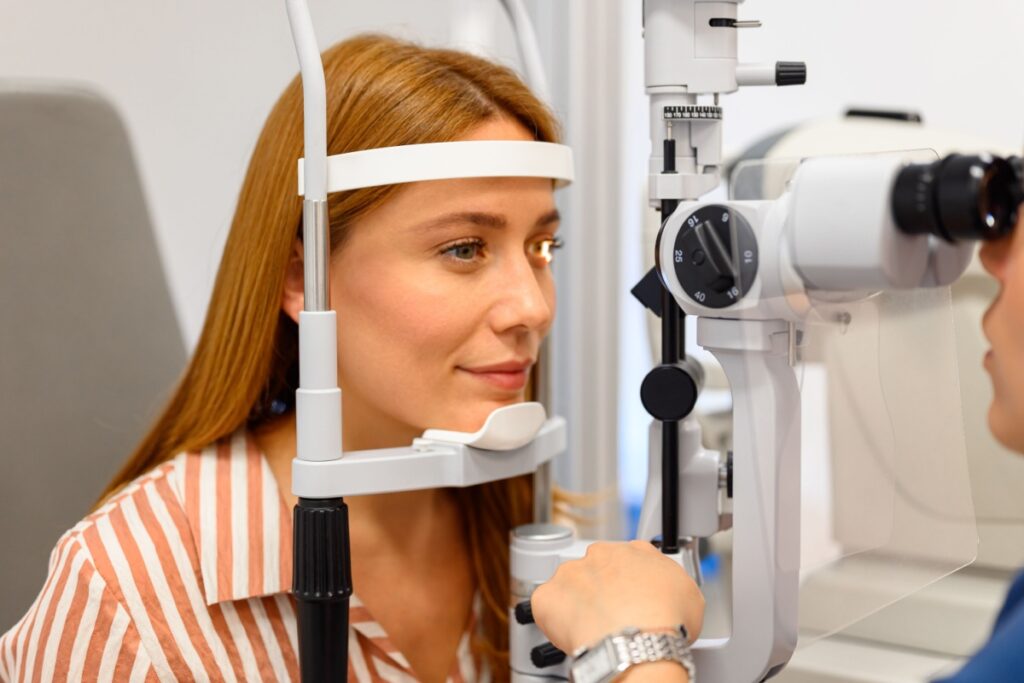
Your routine eye examination covers the fundamentals of eye health and vision. Your eye doctor will check how well you can see at different distances using the familiar eye chart. You’ll also experience the quick puff of air that measures pressure inside your eyes, helping detect conditions like glaucoma.
Your eye doctor will also perform other tests that allow them to spot early signs of eye diseases, complications from diabetes, and/or other health issues. The entire process typically takes 30 to 45 minutes and includes a prescription for glasses if you need vision correction.
Contact Lens Fitting: Beyond Your Regular Eye Exam
A contact lens fitting involves additional measurements that your standard eye exam doesn’t include.
Corneal Measurements & Mapping
As part of a contact lens exam, your eye doctor measures the curve of your cornea, thickness of the corneal surface, eyelid gland structure, and tear analysis. These measurements determine which lens shapes can sit comfortably on your eye.
Your optometry team will also evaluate your tear film quality and quantity. Your tears need to flow properly around and under your contact lenses to keep your eyes healthy and comfortable throughout the day.
Corneal topography creates detailed 3D maps of your eye’s surface to help ensure the perfect lens fit.
Lens Selection & Trial Process
Based on your eye measurements, your eye doctor selects trial lenses made from materials that should be a good fit for your eyes. You’ll actually wear these trial lenses briefly during your appointment, so that your eye doctor can observe how they move on your eyes and how your eyes respond.
Your eye doctor will check that your lenses are centered properly when you blink and don’t move excessively when you look around. They’ll also verify that your vision is sharp and comfortable with the trial lenses before finalizing your prescription.
Why Your Eye Shape Matters for Contact Lenses
The diameter of your cornea affects which lens size can cover your eye properly without sliding around or feeling tight. Some people have larger corneas that need bigger lenses, while others need smaller ones for optimal fit.
Your eye doctor evaluates how your natural tear production works with different lens materials to prevent dryness and irritation.
Timeline & Follow-Up Care Differences
Contact lens fittings require more time and follow-up care than standard eye exams. You can’t just walk out with a year’s supply of lenses on your first visit.
Initial Fitting Process
Your first contact lens fitting appointment typically takes 30 to 45 minutes. Your eye doctor needs time to take the additional measurements, and evaluate your trial lenses. If the patient is a new wearer, then more time is required and we will train insertion, removal, and care for your lenses properly.
You’ll learn the correct technique for handling your lenses without tearing them or introducing harmful bacteria to your eyes. Your team will also explain cleaning solutions and replacement schedules specific to your lens type.
Follow-Up Schedule
You’ll return for a follow-up visit within one to two weeks of getting your first lenses. This appointment allows your eye doctor to check how your eyes are adapting and address any comfort issues before they become problems.
Contact lens wearers also need annual fittings in addition to their regular eye exams. Your eye shape can change slightly over time, and new lens materials might offer better comfort or eye health benefits.
Proper contact lens care prevents serious eye infections and helps your lenses remain comfortable throughout their lifespan.
Special Considerations for Contact Lens Candidates
Not everyone can jump straight into contact lens wear. Certain eye conditions and lifestyle factors affect whether contacts are right for you and which types can work effectively.
Dry Eye & Contact Lens Compatibility
If you experience dry, scratchy, or burning eyes, you might have dry eye syndrome. Some people need dry eye treatment before they can wear lenses comfortably.
Certain lens materials and designs can help people with mild dry eye symptoms. However, addressing dry eye often leads to more success with contact lenses. Dry eye treatment in Danville can help prepare your eyes for comfortable lens wear.
Lifestyle & Visual Needs Assessment
Your daily activities influence which contact lens type can serve you effectively. If you spend long hours at a computer, you might benefit from lenses designed to reduce digital eye strain. Athletes often prefer daily disposable lenses for convenience and hygiene.
Your eye doctor also considers your ability to maintain proper lens hygiene. Contact lenses require consistent cleaning and replacement schedules to prevent eye infections and maintain clear vision.
Ready to explore whether contact lenses are right for your lifestyle? Our experienced team at Danville Optometric Group provides thorough contact lens fittings and comprehensive eye care for the whole family.
Schedule your appointment today to discover comfortable, clear vision that fits your active life.