
You may have noticed your child’s eyeglass prescription gets a little stronger each year. It can feel like a cycle of new exams and new lenses, with their vision always one step behind. You might wonder if there’s a way to do more than just update their glasses.
It’s a common question among parents who want to protect their child’s sight for the future. For many families, myopia control is a valuable approach that focuses on protecting your child’s long-term eye health, not just their current prescription.
What Is Myopia?
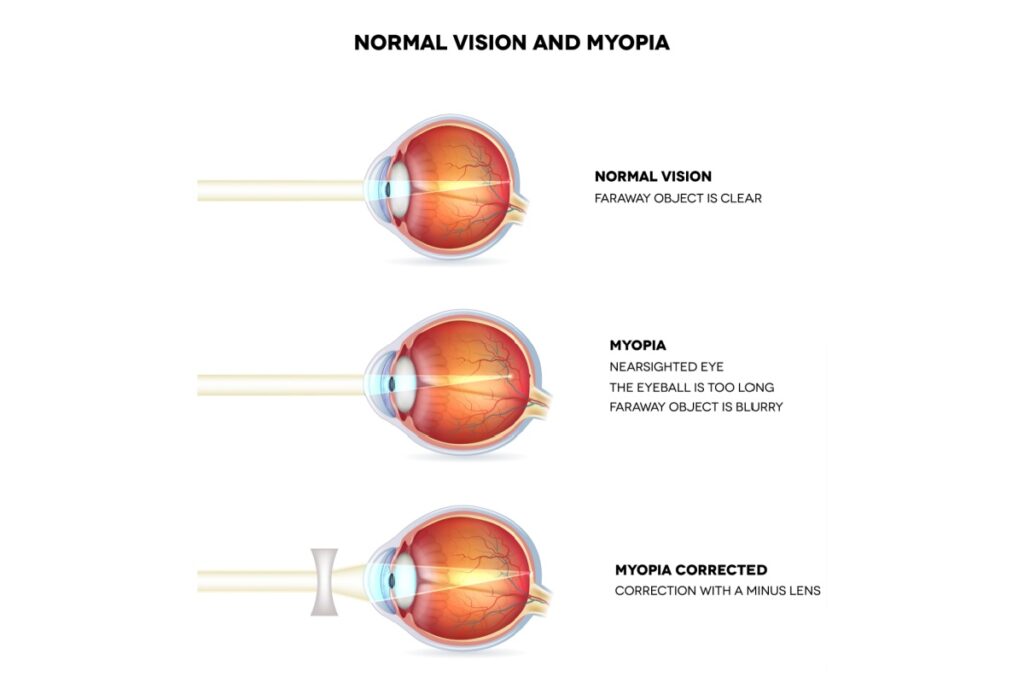
Myopia is the clinical term for nearsightedness. When a child has myopia, their eye grows too long from front to back. This change affects how their eye focuses light, making distant objects appear blurry while close-up objects remain clear.
Think of your child’s eye like a camera. For a picture to be sharp, the lens needs to focus light directly onto the film or sensor. In a myopic eye, the light focuses in front of the retina, the light-sensitive layer at the back of the eye, which results in a fuzzy, out-of-focus image of things far away.
As myopia progresses, the prescription gets stronger because the eye continues to elongate. The elongation of the eyeball (axial length) is the key component to control. This ongoing stretching can place additional strain on the eye’s internal structures. Managing myopia in childhood can reduce the risk of certain eye health conditions in adulthood.
Spot the Signs of Myopia in Your Child
Children often assume that how they see is normal, so they may not tell you if their vision is blurry. As a parent, you can watch for subtle behaviors that might suggest they are having trouble seeing things at a distance.
Common behaviors to watch for include:
- Squinting to see the TV or whiteboard at school
- Moving closer to screens or holding books and tablets near their face
- Complaining of frequent headaches or tired eyes, especially after school
- A sudden or gradual dip in their school performance
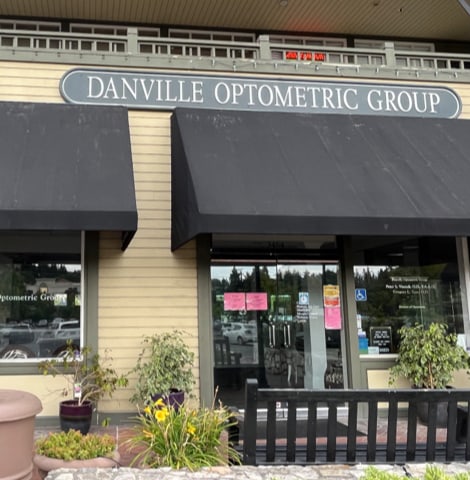
Some children show no obvious signs, which is why routine eye exams are important. A comprehensive exam can detect nearsightedness early, often before you or your child notices any problems. Yearly check-ups allow a doctor to track vision changes over time. At Danville Optometric Group we have specialized equipment that allows us to perform an ultrasound on the eye and thus track and measure the elongation or axial length over time. This is critical and most offices do not offer this type of technology.
How Myopia Control Works
One of the most common myopia control methods is using special glasses or contact lenses. However, these are different from a standard pair of glasses. Instead of just correcting blurry vision, these treatments are designed to slow down the progression of nearsightedness while your child’s eyes are still developing.
Traditional glasses and contact lenses bend light so your child can see clearly. However, they don’t address the underlying reason why the prescription is getting stronger: the continued growth of the eye. Myopia control methods work differently to help manage that growth.
The main objective of myopia management is to slow the rate of eye elongation (axial length). The idea is to help your child end up with a lower, more stable prescription by the time they’re a young adult. This provides a foundation for healthier eyes throughout their life.
Your Child’s Myopia Control Options
Today, there are several effective options for managing childhood myopia. After a thorough eye exam, your optometrist can discuss which approach may fit your child’s vision needs and daily life.
Specialized Contact Lenses
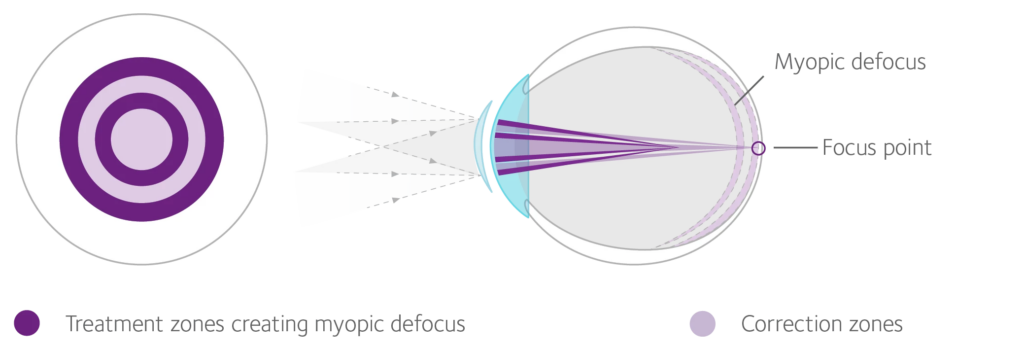
Multifocal soft contact lenses are a popular option for active kids. These lenses have different zones that both correct blurry central vision and change how light focuses in the periphery. This peripheral focus helps signal the eye to slow its growth.
Alternatively, ortho-k lenses are worn each night and gently reshape the cornea. This reshaping can provide clear vision during the day while also slowing myopia progression in children.
Atropine Eye Drops
Another option is a low-dose therapeutic eye drop used once a day. These drops help relax the eye’s focusing muscles and have been shown to be an effective tool for slowing down myopia progression. They are often used alongside regular glasses for vision correction.
Myopia Control Glasses
For children who prefer glasses, innovative spectacle lenses like Stellest offer a great alternative. These are not ordinary lenses. They feature a unique design with a circle of tiny, invisible lenslets. While your child looks through the center for clear vision, these lenslets create a signal that helps slow down eye elongation.
The Long-Term Benefits of Myopia Management
Choosing a myopia control plan is a proactive step for your child’s future. The benefits of slowing myopia progression extend far beyond avoiding the need for a stronger prescription in glasses or contact lenses. More importantly the higher the prescription the higher the other medical risks of the eye such as glaucoma, retinal detachment, vitreous detachment and floaters. In addition, the higher the prescription the more costly the lenses, and it also reduces the possibility of laser correction as the prescription may be too high and not qualify.
By managing how much your child’s eye elongates during their growing years, you’re also supporting their long-term eye health. A lower final prescription is associated with a lower risk for certain eye conditions later in life, such as glaucoma or retinal detachment.
Explore Myopia Control Today
Myopia control is a proactive approach to caring for your child’s eyes. It shifts the focus from simply correcting blurry vision year after year to actively managing the development of their sight for a healthier future.
Exploring your options starts with a conversation about your child’s unique needs. Our team at Danville Optometric Group is here to answer your questions and provide a clear path forward. Your initial consultation includes a comprehensive eye evaluation to measure your child’s vision and determine the most suitable approach.
To learn more about a personalized plan for your child, you can schedule an appointment with us today.