
You walk into a big-box store or browse an online retailer, and the lens options seem straightforward enough. Standard prescriptions at extremely low prices—what could go wrong? The reality is that behind those simple choices lies a complex world of technology that can dramatically change how you see and feel throughout your day.
AI technology now creates prescription lenses that adapt to your exact eye measurements, lifestyle needs, and visual habits in ways that traditional manufacturing simply cannot match. These lenses use computer algorithms to map your unique visual requirements and create truly personalized optics that Danville Optometric Group and other professional practices offer through specialized lens technologies unavailable at standard retailers.
What Makes AI-Designed Lenses Different From Standard Options
When you order glasses online or from a basic retailer, you’re getting lenses made with decades-old manufacturing methods. Computer algorithms in AI-designed lenses work differently—they map your exact eye measurements down to fractions of millimeters. The data creates a digital blueprint that guides every curve and surface of your lens.
Your eyes don’t fit into standard categories, and AI recognizes this. The technology calculates personalized lens curves that give you sharper peripheral vision, something you’ve probably never experienced with traditional lenses. You’ll notice the difference when you glance to the side while driving or scan a room during conversation.
These manufacturing processes eliminate the limitations that force standard lenses into generic shapes. Instead of adapting your vision to fit the lens, AI technology adapts the lens to fit your vision. Professional practices have access to comprehensive diagnostic equipment capable of capturing the precise measurements needed for this customization.
Aspheric Single Vision Lenses & Their Vision Benefits
How AI Shapes Each Lens Surface
Traditional lenses use the same curve across the entire surface, like cutting glasses from a large sphere. AI-designed aspheric lenses gradually change their curvature from center to edge, creating a more sophisticated optical system. This reduces thickness while maintaining optical clarity — your lenses look better and perform better.
The technology minimizes distortion at lens edges, where traditional lenses typically blur or warp your vision. You’ll see clearly all the way to the edges of your lenses, not just the center. This creates a flatter, more attractive lens profile that doesn’t magnify or shrink your eyes behind the frames.
Vision Quality Improvements You’ll Notice
Your peripheral vision sharpens during daily activities like cooking, when you need to see cutting boards, stovetops, and ingredients simultaneously. This improved side vision also helps when you’re walking through crowded spaces or playing sports where awareness matters.
Computer work and reading become more comfortable because the lenses reduce eye strain across the entire visual field. Your eyes don’t have to work as hard to maintain focus when you shift your gaze from screen to keyboard to papers on your desk. This can significantly help with digital eye strain symptoms.
Night driving improves because clearer peripheral vision helps you spot pedestrians, cyclists, and road signs earlier. The reduced distortion also means streetlights and headlights appear clearer and less scattered.
Progressive Lenses with Innovative Technology
Customization Features Available Through Professional Labs
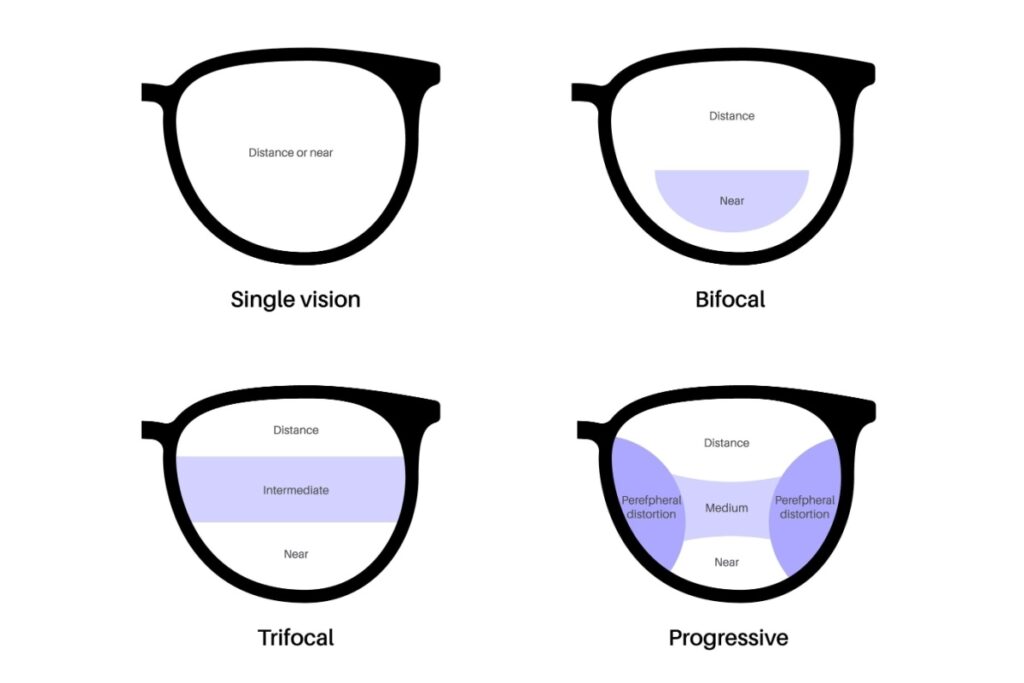
Professional lens labs measure your exact pupil distance and pantoscopic tilt, facial wrap, diagonal dimension, head tilt, and near tracking data that online retailers simply cannot capture accurately. These measurements help your progressive zones align precisely with how you naturally hold your head and move your eyes. Even small variations in these measurements can make progressive lenses uncomfortable or ineffective. These measurements are not taken by dotting a lens or with a ruler like Costco or Warby Parker. They must be taken with special instruments and software through a special software that is proprietary and very custom
The technology takes into account your personal reading habits and lifestyle factors. If you spend hours at a computer, the intermediate zone gets adjusted for your typical screen distance. If you read in bed or do detailed crafts, the near zone gets positioned for those specific activities.
Your prescription strength variations between eyes get factored into the lens design. Most people have different prescriptions in each eye, and AI technology balances these differences to create comfortable binocular vision. Learning about presbyopia development helps explain why these personalized adjustments matter so much for your daily comfort.
Adaptation Benefits for New Progressive Wearers
The transition between distance and reading zones becomes smoother, reducing the learning curve that makes some people give up on progressive lenses. You can move your eyes naturally without hunting for the right viewing zone.
Computer work gets easier with a wider intermediate zone designed for your specific screen distance and viewing angle. This eliminates the neck strain caused by tilting your head to find the right focal point.
New wearers experience fewer swim or sway sensations because the lens zones blend more naturally. Your brain adapts faster to the progressive design, typically within days rather than weeks. Learning more about progressive lens benefits can help you understand what to expect during this adjustment period.
Coatings & Technologies for Modern Lifestyles
Anti-Glare Coatings for Night Driving
Modern anti-glare coatings reduce halos around streetlights and oncoming headlights, making night driving safer and more comfortable. Coating technology has moved far beyond the basic options available at retail chains such as Costco or Warby Parker. Online retailers use even older types of coatings (5 layers). The new coatings are vacuum chamber applied in 15 or more layers. Then scratch coats and water repelling (hydrophobic) and oil repelling (oleophobic) and have ultraviolet protection applied on the back side. The newer coating also have blue filters inside the lens matrix. The old idea of blue light is a misleading term and does not really work.
Dashboard displays, GPS screens, and digital gauges no longer create distracting reflections on your lenses. This helps you maintain focus on the road while still being able to clearly check your speedometer or navigation system.
Low-light contrast improves, helping you distinguish between objects, lane markings, and road surfaces that might otherwise blend together. This enhanced contrast works in parking garages, movie theaters, and other dim environments, too. Professional practices often recommend these coatings alongside UV protection strategies for complete eye safety.
Photochromic Lenses with Everyday Light Protection
Photochromic lenses adjust their darkness in response to UV exposure, helping your eyes stay comfortable in changing light conditions throughout the day. They are useful outdoors in bright sun and on overcast days, while typically remaining mostly clear indoors where UV exposure is low.
Some photochromic lens options also filter a portion of blue-violet light. However, blue light from everyday digital devices has not been shown to damage the eyes. For many people who spend long hours on screens, symptoms like eye strain are more commonly related to reduced blinking, dryness, and prolonged focus rather than blue light alone.
UV protection remains one of the most important benefits of photochromic lenses. Many modern designs block 100% of UVA and UVB rays, helping protect your eyes during everyday outdoor activities, even when the lenses are not fully dark.
Why Professional Labs Offer Technology Online Retailers Can’t
Professional lens labs invest in specialized equipment and materials that cost hundreds of thousands of dollars. Online retailers and retail chains use commercial-grade equipment designed for high volume, not precision customization. This equipment difference directly affects the quality and customization options available to you. More layers equal better vision and better oil and water repelling layers along with blue and uv filters produce todays clearest vision lenses.
Licensed opticians oversee the lens-creation process, ensuring each pair meets medical device standards. These professionals understand how different prescriptions, face shapes, and lifestyle needs interact with lens technology. Online retailers rely on automated systems without this professional oversight. This is one reason why buying from your optometrist often provides better results.
Quality control standards for medical devices require testing and verification that commercial lens operations often skip. When you’re dealing with your vision, these standards help your lenses perform as designed and last as long as expected. Research shows that comprehensive eye care extends far beyond just getting a basic sight test and prescription.
Experience Personalized Lens Technology at Danville Optometric Group
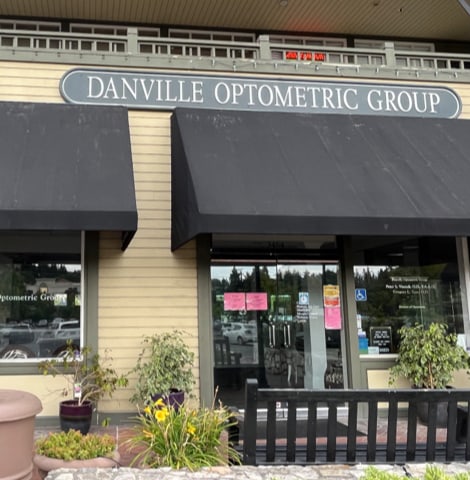
Our team at Danville Optometric Group works with professional labs to access these technologies for patients throughout the Danville area. Whether you need myopia control solutions, dry eye treatment, or vision therapy, our team can connect you with lens technologies that match your specific visual needs. Schedule an eye exam to discover how AI-designed lenses can improve your daily vision experience.