














Contact Lens Exams
in Danville and San Ramon

Book Appointment

Getting a Comfortable Contact Lens Fit

Contact lenses can be an excellent alternative if you’re looking for a change from your prescription glasses but need the same vision correction benefits. 

Many consumers may not be aware that contact lenses are class 2 level medical devices and are regulated by the U.S. Food and Drug Administration (FDA).

Our team wants to help you get a safe, comfortable, and precise fit for your contact lenses. We provide comprehensive exams and fittings, as well as a variety of brands and specialty contact lenses, to help meet our patients’ unique visual needs.

Contact us to schedule your contact lens exam and fitting and get your new contact lenses today.

How Contact Lenses Help

Contact lenses work similarly to your prescription glasses—they are worn to correct refractive errors such as myopia (nearsightedness), hyperopia (farsightedness), astigmatism, and presbyopia.

Many people can find contact lenses more comfortable than glasses, especially during physical activities. Whether you’re playing sports or engaging in outdoor activities, contacts stay in place.

What to Expect During Your Contact Lens Exam

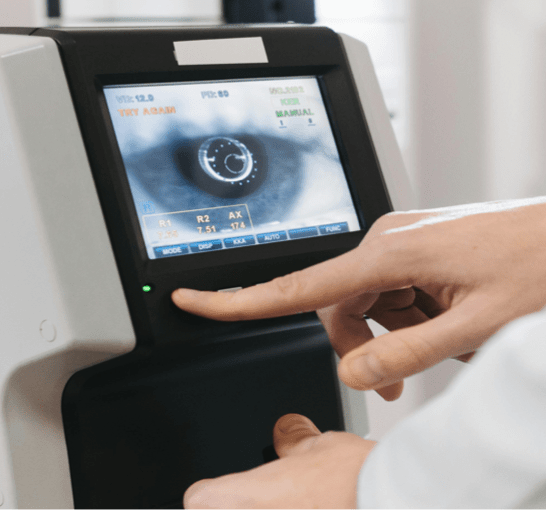
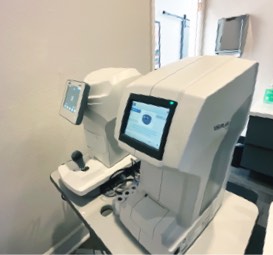
Our team will test your cornea with a machine called a topographer. This maps the exact curvature of your eye so we can accurately fit your lenses.

We will also evaluate your tear quality to determine what material is right for your eyes. Then, we will measure your visual acuity to determine how well you see at near and far distances.

Your exam will also include a full review of your lifestyle needs and preferences to determine which lenses will most benefit your visual needs. After this discussion and your evaluation, we will determine what material and style are right for your eyes. During your appointment, you’ll be given trial lenses to wear. The trial period allows us to assess the fit and comfort before you make your final choice.

For follow-up care, we’ll schedule appointments to monitor your eye health and adjust your lens prescription as needed.

The Contact Lens Fitting Process

We will measure the curvature and shape of your cornea to secure a proper fit for your contact lenses. This is crucial for comfort and effectiveness.

At Danville Optometric Group, we don’t take shortcuts. Our team uses various fitting methods to get the full picture of your eyes before deciding what lenses are right for you.

Corneal topography is an imaging technique that assists our team in mapping the surface of the eye.

Its imaging tool works like a 3D map of the eye, helping us find distortions in the curvature of the cornea. Corneal topography also helps our team determine what type of contact lens can benefit your eyes.

Using the latest infrared technology by Antares, we analyze your tear film, your meibomian glands, fluorescein pattern, tear break-up time, and tear production to determine which contact lens material is best suited for your eyes. These results are instantaneous and viewable by you as the patient.

An ultrasound is a diagnostic tool that helps us test for eye abnormalities. It can also help our team get a clearer image of your eye and determine your contact lens options.

Anesthetic drops may be used to numb the eye and minimize discomfort.

Auto refraction is a computer-generated measurement of a patient’s prescription. While the prescription may not always be exact, it gives our team a good baseline to determine a more accurate prescription.

Auto refraction is a quick procedure. Your optometrist will guide you through the steps within 10–20 seconds.

Auto keratometry measures the cornea’s curvature—the shape of the eye’s front surface.

Our team uses this device for contact lens fitting and the detection of keratoconus. Auto refraction and auto keratometry work together to give our team the full picture of your eyes.

Our Variety of Contact Lenses

Contact lenses fall into 2 main categories: soft contact lenses and rigid gas permeable (RGP) lenses. We offer specialty contact lenses under these categories to help treat various vision issues and provide optimal vision.

Specialty contact lenses like MiSight and ortho-k can help manage myopia for children. In contrast, scleral lenses can be more comfortable for keratoconus or dry eye patients.

Patients who purchase lenses at our office can exchange them during the year for any changes in prescription, and we supply free trials and temporary lenses for your convenience.

Scleral contact lenses are an excellent option for our patients who may not be able to wear contacts due to eye conditions such as keratoconus and dry eye syndrome.

Scleral lenses feature a larger design than traditional contacts and rest on the sclera (the white part of your eye). These lenses allow for space over your cornea’s surface and extra breathability for oxygen to pass through.

MiSight 1 day lenses are soft contact lenses that can help manage myopia in children. MiSight lenses are daily-wear lenses, so they’re low-risk for children—kids as young as 8 years old have shown confidence in handling them. If your children aren’t fans of wearing glasses, then MiSight may be the right option.

Orthokeratology, also known as ortho-k, is a type of rigid, gas-permeable contact lens worn overnight during sleep to mold the cornea and help reduce dependence on glasses and contact lenses throughout the day. As they are relatively low maintenance, ortho-k can be a great option for children with myopia.

RGP-DMP is a specially designed RGP (rigid gas-permeable) lens that can help correct myopia or astigmatism. It is worn daily and uses a separate peripheral curve and power to defocus the peripheral retina. It can be helpful in controlling the axial lengthening that occurs with myopia.

This is an alternative to soft lens myopia control in that it can correct astigmatism and higher powers that soft lens myopia control does not. It is fully customizable. This DMP design requires special training and diagnostic machines to design, which we have at Danville Optometric Group.

Toric contact lenses are available in both soft and RGP materials. Toric lenses are designed to help correct astigmatism. They contain multiple powers, one vertical and the other horizontal. These multiple powers allow the lenses to center correctly on the eye, offering clear eyesight.

Multifocal contact lenses are designed with 2 distinct lens powers for near and distant vision. These lenses help correct presbyopia and can eliminate the need for specific reading glasses.

Multifocal lenses are available in both soft and RGP contact lens options and are designed for daily wear or extended overnight wear.

Hybrid contact lenses feature a rigid gas-permeable center surrounded by a soft outer ring. These specialty lenses are designed to correct refractive errors such as myopia, hyperopia, presbyopia, and astigmatism.

Hybrid contact lenses also help manage keratoconus, which is an irregular corneal curvature.

Daily disposable contact lenses are single-use lenses that provide clear vision all day. No cleaning or storage is required; simply throw them out after use.

These lenses are available for nearsighted, farsighted, and presbyopic patients. Offering better vision and a lower risk of infection, daily disposable lenses can be a great option for those trying contact lenses for the first time or those with a busy lifestyle.

Scleral Lenses for Keratoconus and Dry Eye

For some individuals who have irregular corneas or severe dry eye, standard contact lenses may be uncomfortable. Scleral lenses are custom made lenses that can fit any type of corneal condition but is especially good for patients with lots of astigmatism, corneal scars, or suffering from irregular corneas, post-LASIK patients that can’t be corrected fully with glasses or standard contacts.

Scleral lenses are a special, large diameter lens made from rigid gas-permeable material to hold its shape. It is worn on the white part of the eye (the sclera), covering a larger area of your eye. The lens vaults over your cornea (the clear dome on the front of your eye) without touching it, making it a good option for individuals with keratoconus or other corneal irregularities.

When inserting scleral lenses, you’ll fill the lens with saline solution. This provides a smooth optical surface for clear vision, as well as providing all day hydration to your eyes.

Different types of scleral lenses are categorized by their size and how much of the eye they cover:

  • Corneo-scleral and semi–scleral lenses
  • Mini scleral lenses
  • Full scleral lenses

The size of lens we recommend for you will depend on the reason you are wearing scleral lenses, such as dry eye, keratoconus, or other conditions. This will determine the right fit for your anatomy.

Specialty Contact Lenses for Complex Eye Conditions

We understand that certain eye conditions can require specialized care. Our specialty contact lenses are designed to help address the unique needs of patients with:

  • Pellucid marginal degeneration: Custom lenses help correct irregular astigmatism caused by corneal thinning, improving vision and comfort.
  • Limbal stem cell failure: Scleral lenses protect the cornea and maintain moisture, helping to provide relief and clarity for those experiencing discomfort.
  • Penetrating keratoplasty (PKP): After corneal transplant surgery, custom contact lenses can help optimize vision and comfort, tailored to your specific needs.
  • Radial keratotomy (RK): Specialty lenses stabilize fluctuating vision by helping to provide a smoother refractive surface.

A Comprehensive Contact Lens Experience

We don’t take shortcuts regarding your eyes and vision. Because contact lenses are actually medical devices, a separate comprehensive contact lens exam is required for all contact lens patients. 

The contact lens exam includes a special diagnostic test to determine the condition of your cornea, analysis of the different layers of your tear film, and calculation of the correct contact lens power. 

Contact us to schedule your contact lens exam and fitting, and get your new contact lenses today.

DRY EYE RELIEF & AESTHETIC CARE TO HELP YOU LOOK AND FEEL YOUR BEST

Dry, irritated eyes can make everyday life uncomfortable, but lasting relief starts with understanding what’s causing your symptoms. At Danville Optometric Group, we combine diagnostic technology with personalized treatment plans to address the root cause of dry eye, not just the symptoms.

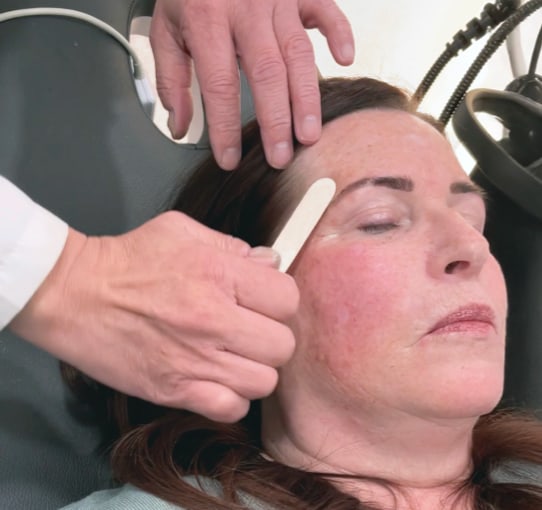
Alongside comprehensive dry eye care, we also offer aesthetic treatments that support healthier eyelids and refreshed, natural-looking skin. Using innovative technologies such as IPL and radiofrequency, our team creates customized treatment plans designed to improve comfort, support long-term eye health, and help you feel confident in your appearance.

Whether you’re seeking relief from chronic dry eye or looking to enhance your overall eye area wellness, we’re here to help you achieve lasting results with compassionate, expert care.

Explore Our Brands

  • Burberry
  • Chanel
  • Cartier
  • Maui Jim
  • Miu Miu
  • Oliver Peoples
  • Polo
  • Prada
  • ZeroG
  • Tom Ford
  • Ray-Ban
  • Dita
  • Burberry
  • Chanel
  • Cartier
  • Maui Jim
  • Miu Miu
  • Oliver Peoples
  • Polo
  • Prada
  • ZeroG
  • Tom Ford
  • Ray-Ban
  • Dita
  • Chanel
  • Cartier
  • Maui Jim
  • Oliver Peoples
  • Prada
  • ZeroG
  • Tom Ford
  • Ray-Ban
  • Dita

Visit Our Office

Visit Us

We’re located in Tassajara Crossing, with plenty of parking available. You can access us from Camino Tassajra or Center Way. 

Our Address

  • 3464 Camino Tassajara
  • Danville, CA 94506

Contact Information

Hours Of Operation

Monday:
Closed
Tuesday:
9:00 AM – 5:00 PM
Wednesday:
9:00 AM – 5:00 PM
Thursday:
9:00 AM – 5:00 PM
Friday:
9:00 AM – 5:00 PM
Saturday:
8:00 AM – 1:00 PM
Sunday:
Closed

Our Google Reviews

Check Out
Our Blogs

instagram facebook facebook2 pinterest twitter google-plus google linkedin2 yelp youtube phone location calendar share2 link star-full star star-half chevron-right chevron-left chevron-down chevron-up envelope fax